


Instagram: @DrKoroshBorhani·@CristinaBorhani_NP·@skinbio.co
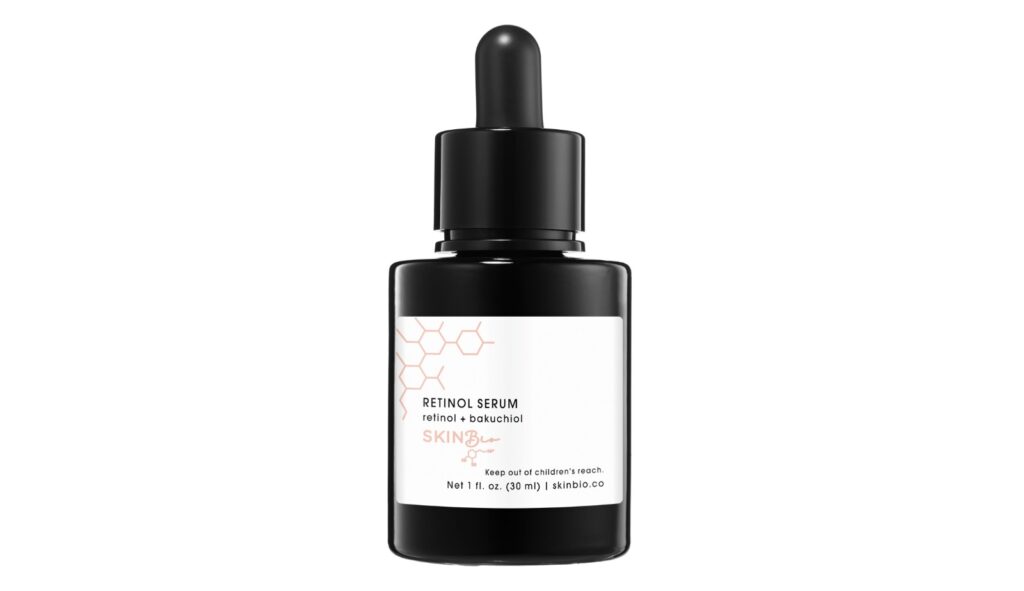
Written by Cristina Borhani, MSN, NP. Medically reviewed by Korosh Borhani, D.O., board-certified emergency physician and Medical Director of Skin Bio. Last reviewed September 20, 2026. Instagram: @CristinaBorhani_NP
The retinol vs. tretinoin question comes up in almost every skincare consult I do, and it is usually asked backwards. People want to know which one is stronger. The more useful question is which one you will still be using in six months, because a retinoid you abandoned in week three because your face was peeling did nothing for you at all.
So here is how I actually think about it in the treatment room, what the labeling and the literature support, and the starting protocol I give patients who have never used a retinoid before.
The short version
Every topical vitamin A derivative has to reach the same endpoint to do anything: retinoic acid, binding retinoic acid receptors in the skin. Tretinoin is retinoic acid. Apply it and the active drug is already there.
Retinol is two enzymatic steps away. Your skin converts retinol to retinaldehyde, then retinaldehyde to retinoic acid. Each step is lossy and depends on enzyme activity that varies from person to person, which is part of why two people using the same over-the-counter retinol get such different results. Retinaldehyde sits in between — one step from active, and a reasonable middle option for people who found retinol boring and tretinoin brutal.
Adapalene is the odd one out and the one I recommend most often for beginners. It is a synthetic retinoid that binds the receptor directly, so no conversion is needed, and since 2016 the 0.1% gel has been available over the counter in the United States — the first retinoid the FDA cleared for OTC acne use. You can buy it at the drugstore tonight. It is genuinely a prescription-strength molecule.
The tenfold figure gets thrown around constantly, and it does have a basis: a 2022 review in Advances in Therapy describes retinol as roughly an order of magnitude less potent than tretinoin, which is where the 0.25% retinol ≈ 0.025% tretinoin rule of thumb comes from. Treat that as a rough conversion, not a lab measurement. Formulation, packaging, stability and how oxidized your bottle is all move the number.
What I want people to hear more than the potency ratio is what tretinoin’s own FDA labeling says. The RENOVA 0.02% label is unusually blunt about this, in capital letters: the product “DOES NOT ELIMINATE WRINKLES, REPAIR SUN-DAMAGED SKIN, REVERSE PHOTOAGING, or RESTORE MORE YOUTHFUL or YOUNGER SKIN.” It is indicated for mitigation of fine facial wrinkles, in patients who are also using a comprehensive skin care and sun avoidance program. Not instead of one.
That sentence is the honest frame for this entire category. A retinoid improves fine lines, tone and texture, and it does so gradually. It is not going to lift anything, and it will not undo twenty years of Los Angeles sun. Deeper texture and laxity are a different conversation — usually radiofrequency microneedling or non-ablative resurfacing — and I would rather tell you that up front than have you rub tretinoin on a jawline problem for a year.
| Option | How it works | Access | Who I usually start here |
|---|---|---|---|
| Retinol (OTC) | Two conversion steps to retinoic acid | Over the counter, many strengths | Sensitive or rosacea-prone skin; anyone nervous about peeling |
| Retinaldehyde (OTC) | One conversion step | Over the counter, fewer products | Tolerated retinol easily, not ready for a prescription |
| Adapalene 0.1% (OTC) | Binds the receptor directly; no conversion | Over the counter since 2016 | Acne plus early aging; most of my beginners |
| Tretinoin (Rx) | Is retinoic acid | Prescription only, requires evaluation | Someone who has tolerated a retinoid for months and wants more |
This is my protocol, and it is deliberately slower than what most product inserts suggest.
Avoid the immediate eyelid and the corners of the nose and mouth for the first few weeks — those are the areas that flake first and the ones people notice in meetings. My own morning routine and how I layer sunscreen over all of this is in the skincare routine post.
There is a break-in period, and nobody warns people about it properly. Weeks two through six are typically the worst: some dryness, some fine flaking around the nose and chin, occasionally a stinging feeling when you apply moisturizer. Some people break out. That is real, it is usually temporary, and it is not an allergy.
What is not normal: raw, weeping, burning skin, or a bright red rash with swelling. That is irritant contact dermatitis, and the answer is to stop for a week, use plain moisturizer, and restart at a lower frequency — not to push through it. Pushing through is how people end up with a compromised barrier that takes two months to settle.
Results run on a much slower clock than the irritation does. Texture and tone start shifting around eight to twelve weeks. Fine lines take longer than that. If you are three weeks in and disappointed, you are simply early.
Not sure which retinoid your skin can actually handle?
A consultation sorts out whether you need a prescription at all, and what else — if anything — should come first.
I tell people no to retinoids more often than they expect.
One more: if you are already using a retinoid and it is working, do not let a stronger number tempt you into starting over. There is no prize for tretinoin.
Not exactly. Tretinoin is retinoic acid itself, while retinol has to be converted by your skin into retinoic acid before it does anything. One published review puts retinol at roughly a tenth of tretinoin’s potency, but the practical difference is as much about tolerance as strength.
Texture and tone typically start to shift around eight to twelve weeks; fine lines take longer. The irritation phase, by contrast, shows up in the first two to six weeks, which is why so many people quit before the useful part.
Yes, most people can — vitamin C in the morning, retinoid at night. What I would not do is start both in the same week. Add one, give it a month, then add the other.
Yes. Tretinoin is prescription only, which means an evaluation by a licensed prescriber — a physician, nurse practitioner or physician assistant — before it can be prescribed. Adapalene 0.1% gel is available over the counter.
Generally no. Injectables do not require a retinoid pause the way resurfacing does. Tell your injector what you are using anyway, especially if your skin is currently irritated.
No. The evidence for fine lines, tone and texture is not age-limited, and I start people on retinoids at every age. Expectations should match the labeling: mitigation of fine wrinkles, not reversal of sun damage.
Sources and further reading
Follow along on Instagram: @CristinaBorhani_NP and @skinbio.co
This article is educational and is not individual medical advice. Retinoid selection, prescription retinoids and any procedure require an evaluation by a licensed provider who has examined your skin.


Consultations at Skin Bio are with a physician or nurse practitioner — not a salesperson. We’re in Calabasas and see patients from across the greater Los Angeles area.
Or call 818.222.9797