


Instagram: @DrKoroshBorhani·@CristinaBorhani_NP·@skinbio.co

Written by Cristina Borhani, MSN, NP. Medically reviewed by Korosh Borhani, D.O., board-certified emergency physician and Medical Director of Skin Bio. Last reviewed September 10, 2026. Instagram: @CristinaBorhani_NP
I grew up in Calabasas. I have spent my whole life under this sun, and I have spent my career looking closely at what it does to skin. The San Fernando Valley in August is a specific kind of hostile: afternoons in the high nineties, midday UV readings that the EPA classifies as “very high” to “extreme,” and then the Santa Ana winds arrive in the fall and pull every drop of moisture out of your face. Skincare advice written for Seattle does not apply here.
So here is what I actually do, morning and night, and why. It is short on purpose. The best routine is the one you do every day.
The short version
Los Angeles gets sunshine roughly three-quarters of the daylight hours in a year. In summer the midday UV index routinely sits between nine and eleven, which is the range where the EPA advises extra protection and where unprotected skin burns in minutes. The Valley adds heat: the NOAA climate normals for Woodland Hills put the average high in August at over 97 degrees, and the all-time Los Angeles County record of 121 degrees was set right here, in September 2020. Heat means sweat, dilated vessels and broken-down sunscreen. Then the dry season arrives and the Santa Ana winds, hot and desert-dry, strip the skin barrier.
The result I see in my chair every week: sun damage and pigment on people who are careful about everything else, dehydrated skin that is also breaking out, and melasma that flares every summer no matter what. The routine below is built for that.
If your skin is dry or normal, a splash of lukewarm water in the morning is enough. If you are oily or you sweat overnight, a mild, non-foaming cleanser. Nothing that leaves your face feeling “squeaky.” That feeling is your barrier being stripped. My pick: https://skinbio.co/product/hydrating-cleanser/
Topical vitamin C is an antioxidant that helps neutralize some of the free-radical damage UV causes and supports collagen. The evidence is specific about the form: L-ascorbic acid, at a concentration of about 10 to 20 percent, in a formula with a low pH, is what has been shown to actually get into the skin. Many derivative forms sold as “vitamin C” have not. Buy from a company that publishes the concentration, store it away from light, and replace it when it turns dark orange. Four or five drops, pressed in, wait a minute. My pick: https://skinbio.co/product/antiox-serum/
Lightweight in summer, richer in the fall winds. Look for ceramides, glycerin or hyaluronic acid on the label. Oily skin still needs this; skipping it makes oily skin produce more oil. My pick: https://skinbio.co/product/skin-strengthening-lotion/
This is the step that matters more than all the others combined, and it is the step almost everyone does badly. The American Academy of Dermatology’s advice is simple: broad spectrum, SPF 30 or higher, water resistant, applied fifteen minutes before you go out, reapplied about every two hours and after swimming or sweating. The face alone needs about a teaspoon. Studies show most people apply a quarter to a half of the amount needed to get the SPF on the label, which means your “SPF 50” may be performing like an SPF 15.
Mineral or chemical? Zinc oxide and titanium dioxide are the two filters the FDA has proposed as generally recognized as safe and effective; the common chemical filters are still under review for more safety data, though they remain on the market. For a face that gets a lot of sun, I personally use a tinted mineral sunscreen with zinc oxide, because the iron oxides in the tint also help block the visible light that drives melasma. And there is genuinely new news for once: in 2026 the FDA finalized approval of bemotrizinol, the first new sunscreen active ingredient in the United States in more than twenty years, so expect better-feeling broad-spectrum formulas to reach shelves.
The single best study on daily sunscreen and aging followed more than 900 adults in Australia for four and a half years. The group assigned to daily sunscreen had 24 percent less measurable skin aging than the group using it when they felt like it. Daily. Not beach days. The commute counts. My pick: https://skinbio.co/product/essential-sheer-spf-50/
Sunscreen, sweat and Valley dust need to come off. If you wear makeup, a double cleanse: an oil or balm cleanser first, then your gentle cleanser. Lukewarm water. Pat dry. My pick: https://skinbio.co/product/clarifying-cleanser/
Retinoids are the only topical category with decades of evidence for improving fine lines, texture and pigment, and prescription tretinoin remains the standard. A 2025 meta-analysis of randomized trials again found significant improvement in both fine and coarse wrinkles compared with placebo. The catch is irritation, and in a dry climate it is worse. Start with a pea-sized amount two nights a week, on completely dry skin, buffered with moisturizer on top. Add a night every two weeks as tolerated. Expect some flaking in month one; if you are red and stinging, back off rather than push through. Retinoids make you more sun-sensitive, which is one more reason the morning sunscreen is non-negotiable. And they are off the table during pregnancy and breastfeeding. My pick: https://skinbio.co/product/retinol-serum/
Niacinamide, a form of vitamin B3, and Azelaic Acid has good evidence for reducing red blotchiness, uneven pigment and fine lines, and for improving the skin barrier. It plays well with retinoids. If your concerns are redness or tone, this is the addition I would make before anything else. My pick: https://skinbio.co/product/brightening-serum/
Heavier than the morning one, especially from October through February when the winds are blowing. Ceramides are the fats your barrier is made of; replacing them is how dry, tight, wind-burned skin recovers. My pick: https://skinbio.co/product/lipid-intensive-recovery-cream/
Want a routine built for your skin instead of the internet’s? A skincare consultation with a clinician takes twenty minutes and usually removes products from your shelf rather than adding them.
Good home care slows the damage. It does not reverse the pigment, texture and laxity that decades of Southern California sun have already deposited. That is where in-office treatments earn their place: chemical peels and laser resurfacing for texture and sun spots, Morpheus8 for early laxity, and a medical evaluation for melasma that keeps coming back. A yearly skin check with a dermatologist is also not optional in this climate; new or changing spots need a professional’s eyes, not a serum.
In the car, yes: side windows block far less UVA than windshields, and the left-side sun damage we see in Angelenos who commute is real. Indoors near large windows, a light layer is reasonable. Under artificial light, no.
Both prevent sunburn and damage when used correctly. Mineral filters (zinc oxide, titanium dioxide) have the clearest safety record and, tinted, help with melasma. The best sunscreen is the one you will apply generously every day.
Yes, just not at the same moment. Vitamin C in the morning, retinoid at night.
Texture improves in about eight to twelve weeks; pigment and fine lines take three to six months. Consistency beats concentration.
SPF 30 or higher, broad spectrum, water resistant, applied in the full amount and reapplied. Above SPF 50 the added protection is small; the amount you apply matters far more than the number.
Sources and further reading
Follow along on Instagram: @CristinaBorhani_NP and @skinbio.co
This article is for general education and reflects one clinician’s routine and opinion. It is not medical advice for any individual. Prescription retinoids and treatment of skin conditions require evaluation by a licensed medical provider.

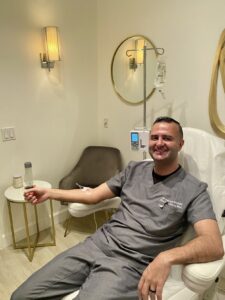

Consultations at Skin Bio are with a physician or nurse practitioner — not a salesperson. We’re in Calabasas and see patients from across the greater Los Angeles area.
Or call 818.222.9797