


Home Blog Patient Guides When Is It Time to Consider Plastic Surgery? A Cosmetic Dermatology NP’s Honest Take
Instagram: @DrKoroshBorhani·@CristinaBorhani_NP·@skinbio.co
Written by Cristina Borhani, MSN, FNP. Medically reviewed by Korosh Borhani, D.O., board-certified emergency physician and Medical Director of Skin Bio. Last reviewed September 23, 2026. Instagram: @CristinaBorhani_NP
I have spent sixteen years injecting faces, and the most useful thing I have learned is where my tools stop working. That sounds like a strange thing to advertise. I think it is the most honest thing I can tell you, and it is the conversation almost nobody in this industry wants to have, because the person having it with you is usually the person selling the syringe.
So here is the question I get asked quietly, at the end of appointments, usually after someone has already decided but wants permission: when is it time to consider plastic surgery?
The short version
When you sit in my chair, I am looking at two separate things.
The canvas is your skin itself. Texture, tone, pigment, pore size, fine lines, the quality and thickness of the collagen. This is where non-surgical treatment genuinely excels. Lasers, microneedling, peels, medical skincare and neurotoxins for expression lines can take a dull, sun-damaged, crepey canvas and make it noticeably better. Not marketing better. Actually better, in a way your friends notice and cannot name.
The structure is everything underneath. Bone, deep and superficial fat pads, muscle, the retaining ligaments that hold it all in position, and the skin envelope itself. Over decades, bone resorbs, fat pads shrink and slide downward, ligaments loosen, and the envelope becomes larger than what it is covering.
Here is the whole point of this article. I can do remarkable things to a canvas. I cannot change the frame it is stretched over. And when the frame is the problem, treating the canvas harder does not fix it. It just costs more.
I want to be specific rather than modest, because vagueness here helps nobody.
Hyaluronic acid filler replaces volume. Used well, it restores a cheek that has deflated, softens a hollow, balances a profile. It is genuinely transformative in the right face.
What it does not do is lift. This is the single most common misunderstanding I correct. Filler placed into a face that has descended adds weight to tissue that is already falling. There is a point on that curve where more filler makes a face heavier and rounder rather than younger, and the person in the mirror knows something is off without being able to say what.
Energy-based treatments like Morpheus8 and ultrasound tightening stimulate collagen and produce real, measurable tightening. I use them constantly. But the honest framing is millimeters of improvement in skin quality and modest contraction, not the centimeters of redraping that surgery achieves. When someone shows me a photo of a result that was obtained surgically and asks whether we can get there with devices, the answer is usually no, and I would rather say so in the consultation than four treatments later.
Neurotoxin relaxes muscles that fold skin. It does nothing for skin that has already stretched.
None of these mean you must have surgery. They mean the question deserves a real answer from a surgeon rather than a guess from the internet.
You pull. If you stand at the mirror and pull your cheeks or your jawline back with your fingers to show me what you want, you have just demonstrated repositioning. That is a surgical motion. No injection reproduces it.
There is excess skin. Upper eyelid skin resting on your lashes, a lower lid that has a true skin fold rather than a shadow, loose skin under the chin that stays loose when you look up. Skin that is genuinely in surplus has to be removed, and only a surgeon can remove it.
The heaviness shows in photographs more than in lines. When you look at a recent photo and your reaction is about the shape of your lower face rather than about wrinkles, that is structural.
You are spending more every year to stand still. This is the one I watch most closely. If your annual treatment plan keeps growing and the result keeps looking about the same, the money is going toward a problem the treatments were never designed to solve.
Your body has changed in ways skin treatments do not reach. After significant weight loss, or after pregnancy and breastfeeding, the changes are often skin envelope and tissue position. There is no topical or injectable answer to that, and pretending otherwise wastes years.
Not sure which side of the line you are on?
That is exactly what a consultation is for, and plenty of mine end with me saying you do not need anything yet.
I say no in this direction too, and it matters just as much.
If your complaint is texture, pigment, dullness, sun damage or fine lines, surgery does not address any of it. A facelift on a poor canvas produces tight, still-damaged skin. The canvas work is my job, and it should usually happen first or alongside.
If you are in the middle of a divorce, a grief, or a bad month, I would rather you wait. That is not me being precious. Permanent decisions made inside a temporary feeling are the ones people regret, and a good surgeon will tell you the same.
If what you want is to look like a specific photograph of a specific person, no procedure delivers that, and the disappointment is baked in before anyone picks up a scalpel.
And if you are in your thirties with early volume loss and good skin quality, you are not a surgical candidate yet. Come back in a decade and we will talk again.
The framing of surgical versus non-surgical is a false choice, and it mostly exists because injectors and surgeons market against each other.
In practice they run together. Skin quality work before surgery means the surgeon is redraping a healthier canvas. Neurotoxin and resurfacing after surgery maintain the result and address what surgery does not touch. Patients who have had a lift still come to me for their expression lines and their skin, and their results last longer because we are each doing the job our tools are built for.
The patients who do worst are the ones who spend eight years and a great deal of money using injectables to postpone a decision, and arrive at surgery anyway, with a face that has been carrying filler for a decade.
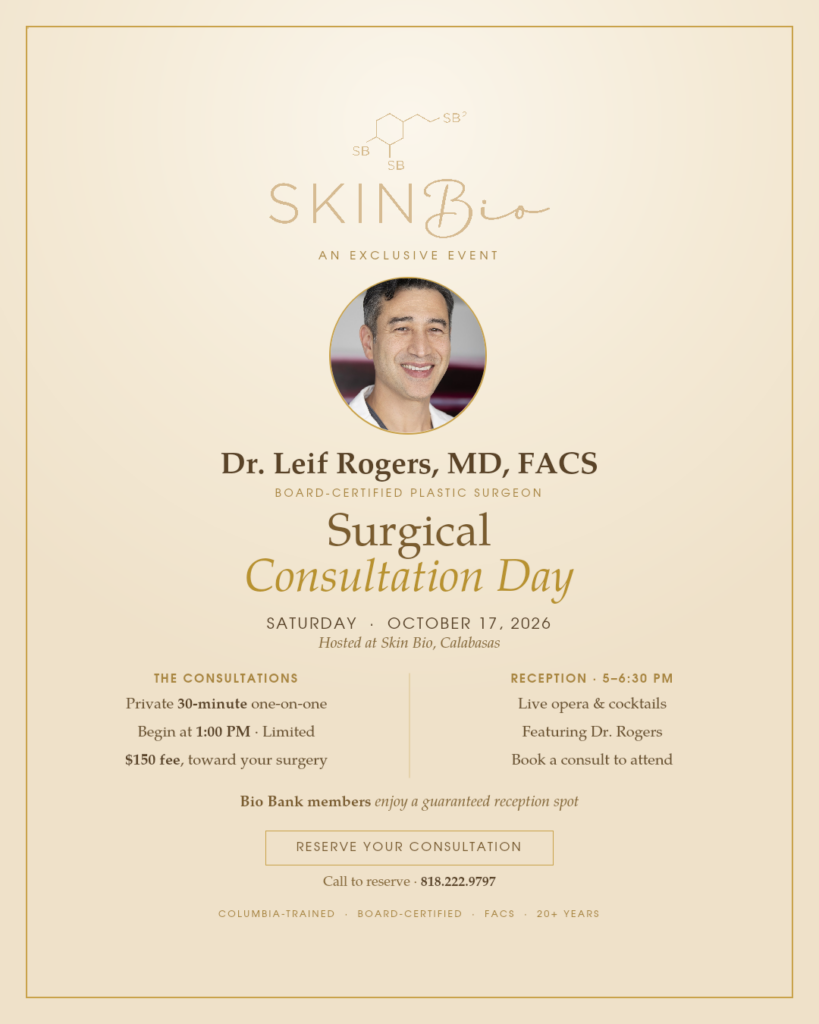
Because this conversation comes up so often, we are hosting one.
Dr. Leif Rogers, MD, FACS, a board-certified plastic surgeon who trained at Columbia, is seeing patients at our Calabasas office on Saturday, October 17, 2026. Private thirty-minute one-on-one consultations begin at 1:00 PM, and the number of slots is limited. The $150 consultation fee is applied toward the cost of surgery if you proceed.
A reception follows from 5:00 to 6:30 PM with live opera, bubbles, and bites. Booking a consultation includes attendance, and Bio Bank members have a guaranteed spot at the reception.
If you have been circling this question for a year, this is a low-friction way to get a real answer from a surgeon, in a room where the person who has been treating your skin can be part of the conversation.
Reserve your surgical consultation
Or call 818.222.9797 and we will hold a slot for you.
The clearest signal is excess skin or tissue that has descended. Injectables replace volume and relax muscle; they do not remove skin or reposition what has dropped. If you find yourself pulling your skin back in the mirror to show what you want, that is a surgical motion.
No. Filler adds volume, and adding volume to a descended face can make it heavier rather than younger. The two procedures solve different problems.
There is no age. It depends on your anatomy, your skin quality, your history and how your face has changed, and some people never need it at all.
Often both. Improving skin quality beforehand means a healthier canvas to work with, and maintenance afterward addresses the texture, tone and expression lines that surgery does not treat.
Yes, and I do regularly. Plenty of consultations end with a skincare plan, a single treatment, or nothing at all.
Use the Department of Consumer Affairs license search at search.dca.ca.gov to confirm the license is current and review any publicly listed disciplinary information. Board certification in plastic surgery can be verified through the American Board of Plastic Surgery.
Sources and further reading
Follow along on Instagram: @CristinaBorhani_NP and @skinbio.co
This article is educational and is not individual medical advice. Surgical and non-surgical cosmetic procedures require evaluation by a licensed provider who can assess your anatomy, history and goals. Results vary between patients, and every procedure carries risks that should be discussed before you proceed.

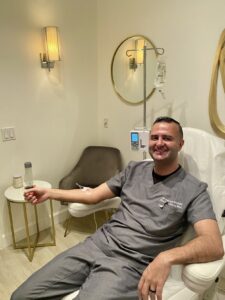
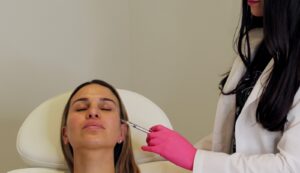
Consultations at Skin Bio are with a physician or nurse practitioner — not a salesperson. We’re in Calabasas and see patients from across the greater Los Angeles area.
Or call 818.222.9797