

Home Blog Injectables Botox vs. Dysport vs. Daxxify vs. Xeomin: An Injector’s Honest Comparison
Instagram: @DrKoroshBorhani·@CristinaBorhani_NP·@skinbio.co

Written by Cristina Borhani, MSN, NP. Medically reviewed by Korosh Borhani, D.O., board-certified emergency physician and Medical Director of Skin Bio. Last reviewed September 10, 2026. Instagram: @CristinaBorhani_NP
Almost every new patient who sits in my chair for wrinkle relaxers asks some version of the same question: “Which one is best?” And almost every time, the honest answer is that the brand matters less than the person holding the syringe. But the brands are not identical, and after years of injecting all of them I do have opinions. Here they are, without the marketing gloss.
The short version
Every product on this list is botulinum toxin type A, purified and dosed in tiny amounts. Injected into a muscle, it blocks the signal that tells that muscle to contract. The muscle relaxes, the skin over it stops folding, and over weeks the etched line softens. The effect is temporary because your nerve endings recover and rebuild the connection, which is why you come back in three to six months.
All of them are FDA approved to treat the frown lines between the eyebrows, the glabellar lines. Botox Cosmetic also carries approvals for crow’s feet, horizontal forehead lines and, more recently, the vertical platysma bands in the neck. Treating other areas, and to be honest, treating almost anything below the eyes, is off-label. Off-label is legal, common and often the right call, but a good injector will tell you which is which.
| Product | Made by | What sets it apart | Typical onset | Typical duration |
|---|---|---|---|---|
| Botox Cosmetic (onabotulinumtoxinA) | Allergan / AbbVie | The original; the most studied; approvals for the most facial areas | 3 to 5 days, full effect around 2 weeks | 3 to 4 months |
| Dysport (abobotulinumtoxinA) | Galderma | Kicks in fastest; spreads a little more, which is a feature on a broad forehead and a liability near the eyelid | Often 2 to 3 days | 3 to 4 months |
| Xeomin (incobotulinumtoxinA) | Merz | “Naked” toxin with no complexing proteins; no refrigeration needed before mixing | 3 to 5 days | 3 to 4 months |
| Jeuveau (prabotulinumtoxinA) | Evolus | Marketed only for aesthetics; behaves much like Botox in practice | 3 to 5 days | 3 to 4 months |
| Daxxify (daxibotulinumtoxinA) | Revance | Stabilized with a peptide instead of human albumin; the longest duration in its trials | Around 2 days for many patients | Median about 6 months in trials; shorter for some patients |
| Letybo (letibotulinumtoxinA) | Hugel | The newest entrant in the U.S.; long track record in Asia | 3 to 5 days | 3 to 4 months |
If you have an event on Saturday and it is Tuesday, Dysport is the one I would rather use. Patients regularly tell me they felt it working by day two. Botox and Xeomin usually take a few more days, and everyone should plan on two weeks for the full result no matter which product you choose. That two-week mark is also when I want to see you back if anything looks uneven, because that is when it can be fairly judged and touched up.
Dysport diffuses a little farther from the injection point than Botox. On a wide forehead that means smoother coverage with fewer injection points. Near the eyelid it means I have to be more conservative and more precise, because toxin that drifts into the muscle that lifts the eyelid gives you a droopy lid for weeks. This is not a reason to avoid Dysport. It is a reason to choose your injector carefully.
Daxxify’s trials showed a median duration of about six months for frown lines, roughly double the standard products. In my chair, some patients get every bit of that, and some get four months and feel disappointed, because they were promised a miracle. I frame it this way: Daxxify is a good choice for patients who already know they respond well to neurotoxin, want fewer appointments, and understand that “median” means half of people get less. It is not what I use for a nervous first-timer, because if you dislike the result you are living with it for a long time.
This is the single most common source of confusion, and it is where price shopping goes wrong. A unit of Botox is not a unit of Dysport. Depending on the area and the injector, a Dysport treatment uses roughly two and a half to three times as many units to do the same job, so a per-unit Dysport price that looks like a bargain is usually the same money once it is in your face. Compare price per treated area, not price per unit, and ask exactly how many units are planned before you agree.
Xeomin is the purified version: the active toxin without the complexing proteins the others carry. In theory that could matter for the rare patient who seems to stop responding to toxin over years of treatment, and it is the one I try first in those cases. In practice, for most people, Xeomin behaves like Botox with a slightly different feel in the syringe.
For a first-time patient with frown lines and forehead lines, I usually recommend Botox or Dysport. Both are predictable, both are easy to adjust at the two-week check, and both wear off on a schedule that lets us fine-tune the dose the second time around.
For someone with a broad forehead who wants a soft, even result, I lean Dysport.
For a patient who has had two or three good rounds and is tired of coming in every three months, I bring up Daxxify.
For a patient who has slowly stopped responding after years of treatment elsewhere, I try Xeomin and I take a hard look at dosing history.
And for everyone: less than you think, placed better than you expect. The look my patients in Calabasas actually want is “rested, not frozen.” That is a dosing philosophy, not a brand.
Not sure which one fits your face? Bring your questions to a consultation. We plan neurotoxin by the unit, tell you the count before we inject, and see you back at two weeks.
Neurotoxins have one of the best safety records in aesthetic medicine, and they still have risks. The common ones are minor and short: a small bruise, a headache the first day, tenderness at the injection points. The one everyone fears, a droopy eyelid or a heavy brow, happens in a small percentage of treatments and is almost always a matter of placement and dose; it resolves on its own over weeks, and prescription eye drops can help in the meantime. Very rarely, people have flu-like symptoms for a day or two.
You should not be treated if you are pregnant or breastfeeding, if you have a neuromuscular condition such as myasthenia gravis or ALS, if you have an active infection at the injection site, or if you have had an allergic reaction to any of these products. Tell your injector about every medication, including antibiotics, because a few can amplify the effect.
Per unit, usually. Per treatment, usually not, because a Dysport treatment uses more units. Compare the total cost for the area you want treated.
In its clinical trials the median duration for frown lines was about six months, which means half of patients got less than that. Many of my patients get five to six months; some get four. It is a genuine improvement over the older products for many people, not a guarantee for everyone.
Yes. There is no interaction between them and no need to “wait out” one before using another. Just make sure your injector knows what you had last time and how many units.
All of them are FDA approved and have similar safety profiles. For a first treatment I prefer a product with a standard three-to-four-month duration so we can adjust the dose sooner if you want more or less movement.
Only if it is dosed that way. A frozen forehead is a choice, and it is not one we make by default. Tell your injector how much expression you want to keep.
Sources and further reading
Follow along on Instagram: @CristinaBorhani_NP and @skinbio.co
This article is for general education and reflects one clinician’s experience. It is not medical advice for any individual. Results, duration and side effects vary. Neurotoxin treatment requires an evaluation by a licensed medical provider.

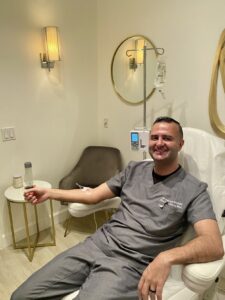
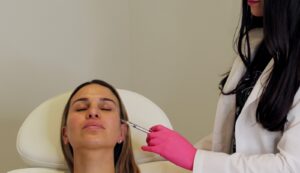
Consultations at Skin Bio are with a physician or nurse practitioner — not a salesperson. We’re in Calabasas and see patients from across the greater Los Angeles area.
Or call 818.222.9797